<p><i>The Complete Illustrated Guide to Farming</i> is a comprehensive, one-stop encyclopedic guide for the beginning farmer, hobby farmer, and small-scale family farmer.<p>Are you interested in the country lifestyle or becoming more self-reliant? Do you think about someday raising livestock or grow
The Complete Illustrated Guide to Farming
โ Scribed by Philip Hasheider, Samantha Johnson
- Publisher
- Voyageur Press
- Year
- 2014
- Tongue
- English
- Leaves
- 323
- Category
- Library
No coin nor oath required. For personal study only.
โฆ Synopsis


Crop Rotation Crop rotation, like green manures, dates back to the dawn of agriculture.
It fell into disuse with the advent of modern chemical fertilizers and monocropping, but this was to the peril of soil health, so rotational cropping is considered a vital spoke in the wheel of organic farming today. In its simplest form, crop rotation is the act of planting something different in a field every year. A rotational sequence is usually for a series of years, coming back to the original crop after four or more years. This cycle disrupts weed and pest activity, helps eliminate soil-borne diseases, and aids soil fertility by growing crops with different nutrient needs in a field (thereby not using up one nutrient such as nitrogen by repeatedly planting corn in the same plot). Some crops do well if rotated after other crops, and when green manures and cover crops are included in the rotation, rotational planting provides the best of all worlds.
The idea is not just to vary the crops in a field, but the family of crops. Rotating cabbage after broccoli does no good, for example, because both are in the brassica family, subject to the same pests, diseases, and nutrient needs. So the first key to a good rotational plan is to vary the crop family on any one field or area.
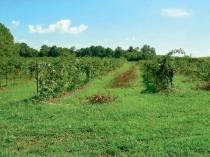
The first key to a good rotational plan is to vary the crop family on any one field or area.
๐ SIMILAR VOLUMES
Taunton's Complete Illustrated Guide to Finishing features advanced techniques on controlling and adjusting color, disguising defects, and repairing finishes. This clear and comprehensive volume for woodworkers includes 850 color photos as well as 30 color illustrations.
Learn how to make every practical woodworking joint in every possible way with the step-by-step photo essays in this book. Professional furniture maker and Fine Woodworking contributing editor Gary Rogowski covers it all -- from standard techniques to variations -- in this complete visual reference